
Is YU Sleep Supplement Worth Trying? What Buyers Should Know
Getting consistent, quality sleep is important for overall health and daily functioning. That is one reason sleep supplements have become increasingly popular in the United States. But with so many products making claims about relaxation, sleep quality, and nighttime recovery, it can be difficult to determine what is actually worth considering.
YU Sleep is a liquid dietary supplement marketed around nighttime wellness. Its formula combines several ingredients commonly found in sleep and relaxation products, including melatonin, GABA, L-theanine, magnesium glycinate, lemon balm, apigenin, tart cherry, 5-HTP, vitamin B2, and vitamin B6.
But does having several well-known ingredients automatically mean a supplement will work?
Not necessarily.
-
Click here – to Get 30% Off on the Best Restorative Sleep Secret
-
Click here – to Learn More About Yu Sleep
The more useful question is what scientific evidence exists for the individual ingredients, how transparent the formula is, and whether the product’s claims go beyond what research can actually demonstrate.
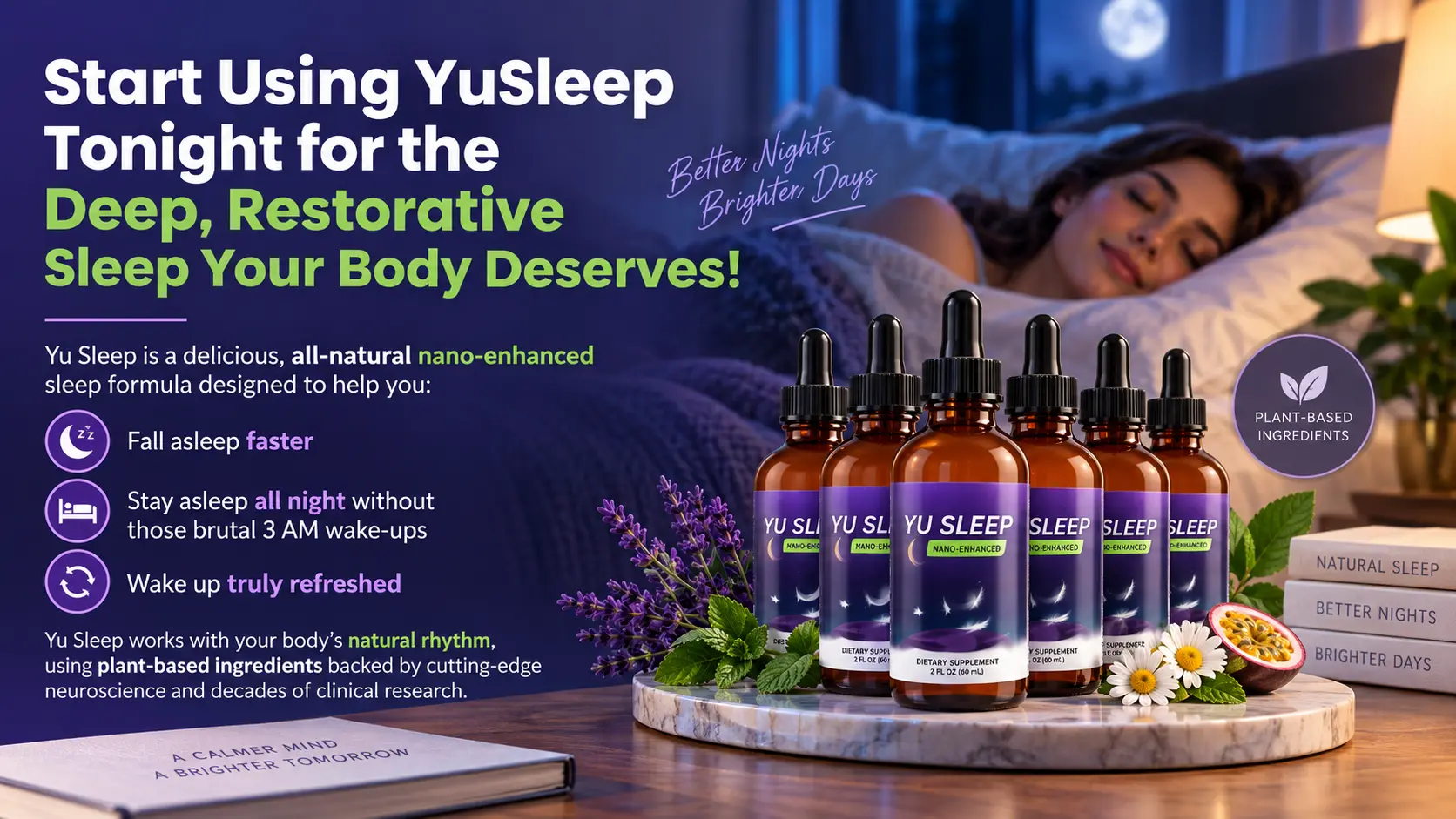
What Is YU Sleep?
YU Sleep is a liquid nighttime supplement. According to the product information provided by the manufacturer, the current formula contains 10 ingredients.
The formula includes:
- Melatonin
- GABA
- L-theanine
- Magnesium glycinate
- Lemon balm
- Apigenin
- Red tart cherry
- 5-HTP from Griffonia seed extract
- Vitamin B2
- Vitamin B6
The manufacturer’s current information lists approximately 0.9 mg of melatonin per serving. Several of the other ingredients are contained within a proprietary blend.
This is an important distinction for consumers. A label can tell you which ingredients are present without necessarily telling you the exact quantity of every individual ingredient.
Does the Ingredient List Look Reasonable?
At first glance, YU Sleep Supplement contains several familiar ingredients that people commonly find in sleep and relaxation supplements.
Melatonin stands out as the best-known ingredient. The body naturally produces this hormone, which helps regulate the sleep-wake cycle.
Other ingredients, including magnesium, L-theanine, lemon balm, and tart cherry, have also attracted scientific interest for their potential connections with relaxation, nutrition, and sleep-related outcomes.
However, popularity does not automatically prove an ingredient’s effectiveness for every claimed benefit.
To understand the formula properly, we need to examine the scientific evidence for each ingredient individually.
What Does Research Say About Melatonin?
Researchers have studied melatonin more extensively than many other ingredients found in sleep supplements.
The body naturally produces melatonin when darkness signals the body to prepare for nighttime. This hormone helps regulate the circadian rhythm. Supplemental melatonin may help people in certain situations involving sleep timing, including jet lag and some circadian-rhythm disruptions.
However, melatonin does not provide a universal solution for insomnia.
Research and clinical guidance indicate that the reason behind someone’s sleep difficulty can influence how useful melatonin may be. Timing also plays an important role.
YU Sleep provides 0.9 mg of melatonin per serving, which represents a relatively modest amount compared with some supplements that contain several milligrams.
Consumers should not assume that a higher melatonin dose will automatically produce better results.
What About Magnesium?
Magnesium is an essential mineral that supports numerous functions throughout the body, including normal nervous-system and muscle function.
A magnesium deficiency can affect health, but not everyone with sleep difficulties needs additional magnesium.
Researchers
The Proprietary Blend: An Important Consideration
One of the biggest things potential buyers should understand about YU Sleep is its proprietary blend.
The manufacturer identifies the ingredients within the blend, but the individual amounts of several ingredients are not separately disclosed.
This matters because dosage can influence how an ingredient performs in research.
For example, knowing that a supplement contains L-theanine tells you that L-theanine is present. It does not tell you whether the quantity matches the amount used in a particular scientific study.
This doesn’t automatically make a supplement ineffective. However, consumers who prioritize complete ingredient-dose transparency should consider this