
The Brain Song Review This 12-Minute Sound Rewires Your Brain
Every year a new “biohack” promises to fix the thing productivity culture broke: our attention. This year, it’s not a supplement or a nootropic stack — it’s a sound.
The Brain Song is a 12-minute digital audio track built around a simple pitch: gently guide your brain toward gamma-frequency brainwaves, the same brain state some neuroscientists associate with focus, learning, and a molecule called BDNF (Brain-Derived Neurotrophic Factor) — often nicknamed “fertilizer for the brain.”
It sounds almost too simple. So we dug into what’s actually behind the claim, who it’s for, and whether a 12-minute listening habit can realistically move the needle on something as complex as brain health.
👉 Click Here to Get the 30% Discount on The Brain Stress Relief
👉 Click Here – to Discover more about The Brain Song Works
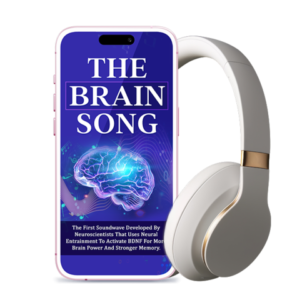
What Exactly Is The Brain Song?
Strip away the marketing and The Brain Song is a single audio track — no app, no subscription, no hardware. You press play, listen for about 12 minutes, and that’s the entire “protocol.” It’s designed to be used daily, ideally in a quiet space where you can actually focus on the sound rather than multitask through it.
The people behind it call it a “neuroscience-inspired sound,” built using layered audio patterns intended to nudge brain activity toward gamma-range frequencies.
This isn’t a new concept — audio entrainment (using sound patterns to influence brainwave states) has been studied in various forms for decades, most famously through binaural beats. The Brain Song appears to be a modern, more polished take on that same underlying idea.
Delivery is 100% digital. There’s nothing shipped to your door, which matters if you’re the type who buys a product with good intentions and then never opens the box.
The Gamma Wave and BDNF Connection — What’s Real and What’s Marketing
Here’s where it’s worth slowing down, because this is the part most reviews either oversell or ignore entirely.
BDNF is real and well-studied. It’s a protein that supports neuron growth, survival, and the brain’s ability to form new connections — a process called neuroplasticity. Higher BDNF activity has genuinely been linked in research to better learning capacity and mood regulation. None of that is in dispute.
Gamma brainwaves are also real — they’re the fastest of the recognized brainwave frequency bands, and they’ve been associated in neuroscience literature with high-level cognitive processing, like moments of insight or intense focus.
The connection between the two is where the science gets earlier-stage. Some research has explored whether increasing gamma wave activity might encourage BDNF expression, but this is an emerging area, not a settled clinical consensus.
It’s promising enough to build a wellness product around — but it is not the same as a guaranteed, clinically proven outcome for any individual person.
To their credit, the makers of The Brain Song aren’t hiding this. The product page carries the standard (and legally required) disclaimer that it’s not intended to diagnose, treat, cure, or prevent any disease.
That’s an important thing to know going in — this is a wellness and relaxation tool built around interesting neuroscience, not a medical device or a substitute for treatment.
Who Seems to Actually Use Something Like This
Audio-based focus and relaxation tools tend to attract a specific set of people:
- Knowledge workers battling “brain rot” — the now-mainstream term (Oxford’s 2024 Word of the Year) for the mental fog that comes from constant low-quality digital consumption and fragmented attention.
- People chasing “flow state” — one of the fastest-growing wellness search terms in 2026, describing that immersive, locked-in mental state that’s hard to access on demand.
- Anyone already using meditation or ambient sound apps who wants something more targeted than generic white noise or a generic meditation track.
- Older adults interested in general brain-health maintenance, since cognitive wellness interest tends to rise with age.
If you already have a mindfulness, journaling, or meditation habit, The Brain Song will likely feel like a natural addition rather than a big lifestyle shift — 12 minutes is a low bar to clear.
Does It Actually Work? Setting Realistic Expectations
This is the honest answer nobody selling a product wants to give you: nobody can promise you a specific, guaranteed cognitive outcome from a 12-minute daily audio track — and you should be skeptical of anyone who does.
What’s more reasonable to expect:
- A short daily ritual that encourages you to sit still, breathe, and focus for 12 uninterrupted minutes — which, on its own, has value in a distraction-saturated world
- A relaxing, low-effort addition to an existing wellness routine
- Exposure to sound patterns designed around genuinely interesting (if still-developing) neuroscience
What you probably shouldn’t expect:
- A dramatic, measurable IQ or memory boost after a few sessions
- A replacement for sleep, exercise, nutrition, or professional care if you’re dealing with a real cognitive or mental health concern
- Guaranteed results, since brain response to audio entrainment varies significantly between individuals
Some users report feeling calmer or more focused after consistent use — which lines up with what you’d expect from any structured relaxation practice, gamma-wave claims aside.
Whether the specific BDNF mechanism is doing the heavy lifting, or whether it’s simply the benefit of a quiet, focused 12-minute daily habit, is genuinely hard to isolate from the outside.
How It Compares to Other Brain-Health Trends Right Now
2026’s wellness search data shows people are spending heavily across a few overlapping categories: calming supplements like ashwagandha and L-theanine, magnesium for sleep and anxiety support, and non-drug neuro-stimulation approaches gaining traction as alternatives to trial-and-error medication.
The Brain Song sits closest to that last category — a non-invasive, non-ingestible approach to supporting brain state, minus any pills or hardware.
Compared to supplements, its advantage is simplicity: no dosing, no interactions to worry about, nothing to swallow.
Compared to meditation apps, its advantage is specificity: a fixed, purpose-built track rather than a sprawling library you have to sort through. Its main limitation is the same as any audio-based wellness tool — effectiveness is hard to independently verify, and results will vary from person to person.
Pricing and Guarantee
The Brain Song is currently listed at $39 as a one-time digital purchase — no recurring subscription. It’s sold through ClickBank, a well-established digital retailer, and comes with a 90-day money-back guarantee,
so if it doesn’t fit into your routine or you don’t notice any benefit, there’s a window to request a refund (standard terms apply, so keep your purchase confirmation).
For a wellness habit you’re testing out, that refund window meaningfully lowers the risk of trying it.
Conclusion
The Brain Song isn’t a miracle cure, and it doesn’t claim to be one, disclaimers aside. It’s a low-effort, science-inspired audio habit built around a genuinely interesting (if still-emerging) area of neuroscience — the relationship between gamma brainwaves and BDNF activity.
If you’re the type who’s open to trying a 12-minute daily ritual, values simplicity over supplements or subscriptions, and wants the safety net of a money-back guarantee, it’s a low-risk way to explore whether sound-based focus training fits into your routine.
If you’re looking for a clinically proven, guaranteed cognitive upgrade, no product — this one included — can honestly promise that.
Try The Brain Song Today → 90-day money-back guarantee. Instant digital delivery.
Frequently Asked Questions
Is The Brain Song scientifically proven? The individual concepts — BDNF’s role in brain health and gamma waves’ association with cognitive processing — are supported by neuroscience research.
The specific link between audio-induced gamma activity and BDNF increase is an emerging research area, not a settled clinical fact, and the product itself is not marketed as a treatment or cure for any condition.
How long until I notice anything? There’s no guaranteed timeline. Some users report noticing a calmer or more focused feeling after consistent daily use over a few weeks, but individual response to any audio-based relaxation practice varies.
Is it safe? It’s a digital audio track, not a supplement or device, so there’s no ingestion or physical risk in the way there would be with pills. As with any audio entrainment product, people with a history of seizures or certain neurological conditions should check with a healthcare provider before use.
Can I get a refund if it’s not for me? Yes — it comes with a 90-day money-back guarantee through ClickBank, subject to their standard return terms.
Disclosure: This article contains an affiliate link. If you purchase through it, we may earn a commission at no extra cost to you. This product has not been evaluated by the FDA and is not intended to diagnose, treat, cure, or prevent any disease.