
What Are Binaural Beats? How They Work, Benefits & How to Listen
Have you ever wondered how sound can influence the way you feel, think, or relax? From calming instrumental music to nature sounds, audio has become a popular part of many people’s daily routines. One technique attracting attention is binaural beats, a type of auditory illusion created by playing slightly different sound frequencies in each ear.
But what are binaural beats, and can they really influence brain activity, concentration, relaxation, or sleep? Are the benefits supported by scientific research, or is the idea more complicated than it sounds?
 In this beginner-friendly guide, we will explore how binaural beats work, the different frequency ranges, their potential benefits, and practical ways to listen. We will also look at what scientific studies suggest and why it is important to maintain realistic expectations.
What Are Binaural Beats?
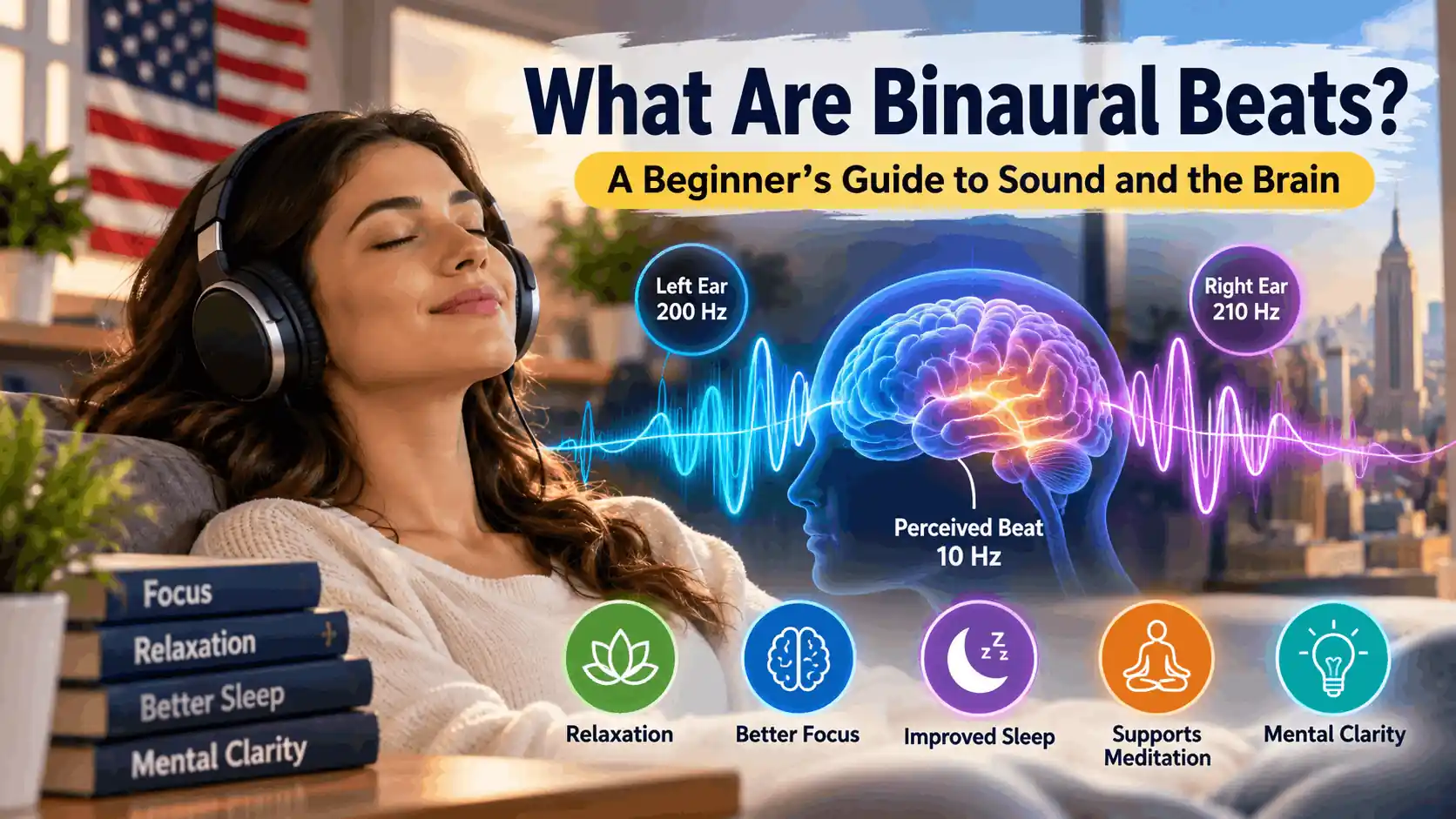
Binaural beats are an auditory illusion that occurs when each ear receives a slightly different tone. Your brain processes the two tones and you perceive a rhythmic pulsing sensation at a frequency corresponding to the difference between them.
For example, imagine listening to a 200 Hz tone in your left ear and a 210 Hz tone in your right ear. You may perceive a beat with a frequency of 10 Hz.
This perceived beat is not simply another sound being played through your headphones. It is created through the way your auditory system processes the two tones.
This phenomenon is called a binaural beat because the experience involves both ears.
Unlike ordinary music, binaural beats are often designed around specific frequency differences. Some audio programs combine them with gentle music, ambient sounds, or nature-inspired backgrounds to create a more comfortable listening experience.
The concept has attracted interest from researchers studying attention, relaxation, brain activity, and auditory perception.
How Do Binaural Beats Work?
To understand how binaural beats work, it helps to know a little about sound frequency.
Frequency is the number of sound-wave cycles per second, measured in hertz (Hz). A higher frequency generally corresponds to a higher-pitched tone, while a lower frequency corresponds to a lower-pitched tone.
When two slightly different tones are presented separately to your ears, your auditory system can perceive a rhythmic fluctuation.
For example:
- Left ear: 250 Hz
- Right ear: 256 Hz
- Perceived beat: 6 Hz
The 6 Hz difference creates the perceived beat.
Why Are Stereo Headphones Used?
Stereo headphones deliver a separate sound signal to each ear. This separation is important because binaural beats depend on presenting different frequencies to the two ears.
Ordinary speakers may mix the sounds in the air before they reach your ears, changing the listening experience.
For this reason, many binaural beat recordings recommend stereo headphones.
What Is Brainwave Entrainment?
Brainwave entrainment is the idea that rhythmic external stimulation may influence the timing or patterns of brain activity.
Researchers have investigated whether binaural beats can produce measurable changes in brain electrical activity, often recorded using electroencephalography (EEG).
However, the findings are not consistent across all studies. A systematic review published in PLOS ONE in 2023 examined 14 studies and found mixed results. Some studies supported the brainwave entrainment hypothesis, while others did not.
This means that listening to a particular frequency does not guarantee that your brain will enter a matching state or produce a specific mental effect.
Potential Benefits of Binaural Beats
People explore binaural beats for several reasons, including relaxation, focus, meditation, and sleep routines. Scientific research has examined some of these uses, but the strength of evidence varies.
1. Relaxation and Stress Management
Some studies suggest that binaural beats may help support relaxation or reduce feelings of anxiety in certain settings.
A 2019 meta-analysis published in Psychological Research reviewed 22 studies and reported an overall moderate effect across several outcomes, including anxiety and cognition.
However, the included studies differed in their methods, participants, and listening conditions. The findings should not be interpreted as proof that every binaural beat recording reduces stress.
Some people may find the listening experience calming, while others may notice little difference.
2. Focus and Concentration
Another area of interest is binaural beats for focus.
Researchers have explored whether different auditory beat frequencies influence attention, memory, or performance on cognitive tasks.
A 2022 systematic review and meta-analysis examined research on memory and attention. Although its overall findings suggested a possible benefit, the individual studies reported conflicting results, especially across different frequency ranges and cognitive tasks.
If you enjoy listening to quiet background audio while studying or working, binaural beats may be one option to explore. However, they are not a proven shortcut to improved concentration.
Your environment, sleep, workload, and personal listening preferences also matter.
3. Sleep and Bedtime Relaxation
Binaural beats for sleep are another popular topic. Some recordings are marketed for bedtime relaxation, often using slow, gentle sound patterns.
Researchers have investigated whether auditory stimulation can influence sleep-related experiences and sleep quality. Nevertheless, the evidence specific to binaural beats remains limited and inconsistent.
If listening to quiet audio helps you establish a relaxing bedtime routine, that experience may be useful even without a specific brainwave effect.
It is important not to treat binaural beats as a replacement for appropriate care if sleep problems are persistent.
4. Meditation and Mindfulness
Many people include binaural beats in their meditation routines because repetitive sounds give them a consistent point of focus.
A gentle audio background can create a peaceful environment and help listeners build a relaxing routine.
However, you don’t need binaural beats to meditate. You can also practice breathing exercises, silent meditation, guided mindfulness, or listen to instrumental music.
Choose the method that feels most comfortable and suits your personal preferences.
Different Types of Binaural Beats
Researchers often group binaural beats into frequency ranges that correspond to different EEG brainwave bands.
These categories help explain common audio terminology. However, listening to a particular frequency does not guarantee a specific mental state or brainwave pattern.
| Frequency Range | Common Name | Commonly Associated Brain Activity |
|---|---|---|
| 0.5–4 Hz | Delta | Deep sleep and slow-wave brain activity |
| 4–8 Hz | Theta | Drowsiness, memory processes, and meditation research |
| 8–13 Hz | Alpha | Relaxed wakefulness and reduced alertness |
| 13–30 Hz | Beta | Active thinking and attention |
| 30 Hz and above | Gamma | Certain types of information processing and cognition |
Delta Frequencies
Delta waves occur during deep stages of non-REM sleep. Many audio creators use delta-range binaural beats in recordings designed for bedtime relaxation.
However, listening to delta-range beats does not automatically produce deep sleep.
Theta Frequencies
Theta activity plays a role in several brain processes, including memory and certain stages of drowsiness.
Many audio programs feature theta binaural beats for meditation and relaxation. Researchers continue to explore whether these sound patterns consistently influence brain activity or cognitive performance.
Alpha Frequencies
Your brain commonly produces alpha activity during relaxed wakefulness, especially when you rest with your eyes closed.
Many audio creators design alpha-range recordings for relaxing, reading, or practicing meditation.
Beta Frequencies
Beta activity relates to alertness and active mental processing.
Some audio creators use beta-range beat differences in recordings designed for focus. However, listening to beta-frequency audio does not guarantee better productivity or improved attention.
Gamma Frequencies
Researchers study gamma activity to understand different aspects of perception and information processing.
Some audio creators market gamma-range recordings for mental performance. However, gamma brain activity alone does not prove that these recordings enhance memory or intelligence.
How to Listen to Binaural Beats
You can explore binaural beats with a simple and comfortable listening setup. Follow these steps to get started.
Step 1: Choose Stereo Headphones
Use stereo headphones that deliver separate audio signals to your left and right ears. Check that both sides work properly before you start listening.
Step 2: Select a Recording
Choose a recording that matches your listening preferences. You might prefer gentle ambient sounds, instrumental music, or simple tones.
Check the recording details to confirm that it uses binaural beats rather than ordinary rhythmic music or another audio technique.
Step 3: Keep the Volume Comfortable
Set your headphones to a moderate, comfortable volume. Avoid increasing the volume excessively to chase a stronger effect.
Step 4: Find a Suitable Environment
Choose a quiet place where you can relax without unnecessary distractions. Sit comfortably while reading, taking a break, or enjoying a quiet moment.
Step 5: Pay Attention to Your Experience
Notice how the audio makes you feel. It might help you relax, distract you, or make little difference.
Researchers have not established a universal listening duration or frequency that guarantees specific results.
Stop listening if you experience discomfort, headaches, dizziness, or other unpleasant effects.
Are Binaural Beats Scientifically Proven?
Scientific research continues to explore how binaural beats affect the brain and influence different mental processes.
In 2023, researchers published a systematic review in PLOS ONE that examined whether binaural beat stimulation influences brain oscillatory activity. The review analyzed 14 studies and found inconsistent results. Some studies supported the brainwave entrainment hypothesis, while others did not.
A separate 2019 meta-analysis examined studies involving cognition, anxiety, and pain perception. The researchers reported an overall moderate effect across the included studies. However, individual results varied according to the outcome, research methods, and listening conditions.
These findings show that researchers have identified potential effects worth investigating, but they have not established consistent results across all applications.
Future research needs larger, well-designed studies to answer several important questions:
- Do binaural beats reliably influence EEG activity?
- Which listening conditions may affect specific outcomes?
- Do individuals respond differently to binaural beat recordings?
- How do binaural beats compare with music, silence, and other auditory stimulation methods?
- Do any observed effects continue after a listening session ends?
Current research suggests that binaural beats may offer potential benefits in certain situations. However, the evidence does not justify broad promises of guaranteed improvements in cognition, emotional well-being, or sleep.
Binaural Beats vs. Other Brain Audio Programs
Not every brain-focused audio program uses binaural beats. Different programs use different sound techniques to create distinct listening experiences.
Here are some common examples:
- Binaural beats: Present two slightly different tones separately to your left and right ears to create a perceived rhythmic beat.
- Isochronic tones: Use regularly repeated sound pulses at specific intervals.
- Ambient music: Provides continuous background sounds that create a particular listening atmosphere.
- Guided meditation: Combines spoken instructions with breathing exercises, mindfulness techniques, or relaxation practices.
- Nature sounds: Use recordings of rainfall, flowing water, wind, and other natural environments to create a calming atmosphere.
Each approach creates a different listening experience, and people may respond to them in different ways.
If you are considering a commercial brain audio program, examine its features, listening requirements, pricing, refund policy, and evidence behind its claims.
Don’t rely on a product’s name or marketing language to determine its effectiveness. Instead, review the available information and decide whether the program meets your needs and expectations.
Frequently Asked Questions
Do binaural beats work without headphones?
Traditional binaural beats require separate tones to reach each ear. Stereo headphones are therefore commonly recommended. Listening through ordinary speakers may not create the same perceptual effect because the sounds can mix before reaching your ears.
How long should you listen to binaural beats?
There is no universally accepted listening duration that guarantees results. Follow the recording’s instructions, keep the volume comfortable, and prioritize your own listening comfort rather than assuming that longer sessions are always more effective.
Can you listen to binaural beats while studying?
Some people prefer quiet audio while studying. You can explore whether binaural beat recordings feel helpful or distracting, but research has not established that they consistently improve academic performance or concentration.
Are binaural beats the same as brain waves?
No. Binaural beats are an auditory perception created by presenting different tones to the ears. Brain waves refer to patterns of electrical activity measured in the brain. Researchers study possible relationships between the two, but they are not the same phenomenon.
Are binaural beats suitable for everyone?
People can respond differently to audio. Keep listening volumes comfortable and stop if you experience discomfort. If you have concerns about your hearing or a medical condition that may be affected by audio stimulation, seek appropriate professional guidance.
Conclusion
Binaural beats offer an interesting example of how the auditory system processes sound. By presenting slightly different tones to each ear, these recordings create a perceived rhythmic beat that researchers are continuing to investigate.
People explore binaural beats for relaxation, concentration, meditation, and bedtime routines. Some research suggests potential benefits in certain situations, but findings are mixed, and there is no guarantee of a specific mental or neurological outcome.
If you are curious about sound-based wellness programs, focus on understanding how they work, checking the evidence behind their claims, and choosing audio that fits your preferences.
Want to explore a brain-focused audio program? Read our detailed review of The Brain Song to learn about its features, listening experience, and important considerations before making a purchase.
Editorial note: This article is for general educational purposes only. It does not provide medical advice or claim that binaural beats diagnose, treat, or cure any health condition.