
Oral Probiotics vs Regular Probiotics What’s the Difference?
Probiotics have become a popular part of many people’s wellness routines, but not all probiotics are designed for the same purpose. If you’ve been researching probiotics for oral health, you may have come across a newer category called oral probiotics.
So, how are oral probiotics different from regular probiotics? Are they simply another type of probiotic supplement, or are they designed to work differently?
The answer comes down to several factors, including the strains used, where they are intended to work, how they are delivered, and the research behind them.
In this guide, we’ll explain the differences between oral probiotics and conventional probiotics, discuss what current research says, and explain what to consider when choosing an oral probiotic.
What Are Regular Probiotics?
Probiotics are live microorganisms that are studied for their potential health benefits when consumed in adequate amounts. Many conventional probiotic supplements are designed with the digestive system and gut microbiome in mind.
You can find regular probiotics in products such as:
- Capsules
- Tablets
- Powders
- Yogurt and fermented foods
- Other dietary supplements
Different probiotic products contain different strains and combinations of microorganisms. This is important because probiotic effects can vary considerably depending on the specific strain, dose, formulation, and intended use.
For example, a probiotic strain studied in connection with digestive health should not automatically be assumed to provide the same effects in the mouth.
That’s one reason researchers have become interested in probiotics specifically intended for oral health.
What Are Oral Probiotics?
Oral probiotics are probiotic products designed specifically for the oral environment.
The mouth contains its own complex microbial community, known as the oral microbiome. It includes many different microorganisms that naturally live on the tongue, teeth, gums, and other surfaces.
The goal of an oral probiotic is generally to introduce selected microorganisms into this environment.
Many oral probiotic products are available as lozenges, chewables, or other formats that allow the probiotic microorganisms to interact with the mouth before being swallowed.
This delivery method can be an important distinction from conventional probiotic capsules that are primarily designed to deliver microorganisms through the digestive system.
Research into oral probiotics has examined whether particular probiotic strains may influence the oral microbial environment and certain measures associated with oral health. However, results vary between studies and products.
Oral Probiotics vs. Regular Probiotics: Key Differences
The easiest way to understand the difference is to compare their intended environments.
| Feature | Oral Probiotics | Regular Probiotics |
|---|---|---|
| Primary focus | Oral environment | Usually digestive system |
| Common formats | Lozenges, chewables | Capsules, powders, foods |
| Intended contact | Mouth | Gastrointestinal tract |
| Strain selection | May focus on oral-health research | Often focused on gut-related research |
| Main area of interest | Oral microbiome | Gut microbiome |
These categories aren’t completely separate. Some microorganisms may be studied for multiple purposes, and products vary.
Therefore, it’s more accurate to think of oral probiotics as a specialized category of probiotics, rather than assuming that every probiotic can be used interchangeably.
Why Does the Oral Microbiome Matter?
Your mouth is home to a large and diverse microbial community.
These microorganisms interact with each other and with the surfaces of the mouth. Researchers are studying how changes in this microbial environment may be associated with oral conditions and overall oral health.
This has led to growing interest in the relationship between the oral microbiome, probiotics, and gum health.
However, having microorganisms in the mouth isn’t automatically a problem. The oral microbiome is naturally complex, and the goal isn’t simply to eliminate all bacteria.
Instead, researchers are interested in maintaining a healthier microbial balance and understanding how specific microorganisms interact with the existing oral community.
How Might Oral Probiotics Support Oral Health?
Research into oral probiotics is still developing, but several potential mechanisms have been investigated.
Competition Between Microorganisms
Certain probiotic microorganisms may interact with other microorganisms by competing for nutrients or attachment sites.
This is one reason researchers have investigated whether selected probiotic strains could influence the composition of the oral microbial community.
Interaction With the Oral Environment
An oral probiotic can potentially have more direct contact with the mouth than a conventional probiotic that is swallowed quickly.
The delivery format therefore matters. Lozenges and chewable products may allow microorganisms to remain in contact with oral surfaces for longer than some conventional supplement formats.
Support for a Balanced Oral Microbiome
Researchers are also studying whether specific probiotic strains can influence the microbial balance of the mouth.
Importantly, these potential mechanisms should not be interpreted as proof that every oral probiotic product will produce the same result.
The effects depend on the specific microorganisms, formulation, dose, delivery method, and individual circumstances.
What Does the Research Say About Oral Probiotics?
This is one of the most important questions to ask before choosing an oral probiotic.
Research into oral probiotics has produced interesting findings, but the evidence isn’t uniform.
Some clinical studies and reviews have reported potentially beneficial effects associated with certain probiotic strains and oral-health outcomes. Other studies have found smaller effects or inconsistent results.
One major reason is that probiotics aren’t a single treatment. Different studies may use different:
- Strains
- Doses
- Delivery methods
- Treatment durations
- Study populations
- Oral-health outcomes
A 2026 umbrella review of meta-analyses reported potentially beneficial effects for some oral-health outcomes but also highlighted considerable variation and limitations in the available evidence.
This means consumers should be cautious about statements suggesting that probiotics universally improve oral health.
A better approach is to look at the specific strains and formulation being studied and distinguish research on probiotics generally from research on a particular commercial product.
Are Oral Probiotics Better Than Regular Probiotics?
There isn’t a simple yes-or-no answer.
It depends on what you’re trying to accomplish.
If your primary interest is digestive health, a conventional probiotic product designed for the gastrointestinal system may be more relevant.
If you’re specifically interested in the oral microbiome, an oral probiotic may be more directly aligned with that goal.
The important point is that “oral” doesn’t automatically mean “better.”
Instead, consider whether the product’s formulation, probiotic strains, delivery method, and supporting evidence match your intended use.
Can Regular Probiotics Help Your Mouth?
Some probiotic microorganisms used in conventional products have also been investigated in oral-health research.
However, you shouldn’t assume that taking a regular digestive probiotic will provide the same effect as a product specifically designed for the oral environment.
The reason is that probiotic effects are often strain-specific.
A microorganism studied in one part of the body doesn’t automatically produce identical effects elsewhere.
That’s why researchers continue to investigate which strains and delivery methods may be most appropriate for oral applications.
What Should You Look for in an Oral Probiotic?
If you’re considering an oral probiotic, don’t focus only on the word “probiotic” on the label.
Consider the following factors.
1. Specific Probiotic Strains
Look for products that clearly identify the microorganisms or strains included.
Different strains can have different characteristics and research histories.
2. Delivery Format
Consider whether the product is intended to dissolve, dissolve slowly, or otherwise remain in contact with the mouth.
The delivery method can be relevant when the product is specifically intended for the oral environment.
3. Evidence
Look for credible information about the ingredients and strains rather than relying entirely on broad marketing statements.
Ideally, the evidence should relate as closely as possible to the actual strain, formulation, and intended use.
4. Transparent Ingredients
A trustworthy product should clearly disclose its ingredients and provide understandable directions for use.
5. Realistic Expectations
Oral probiotics should not be viewed as a replacement for basic dental care.
Regular brushing, cleaning between the teeth, a balanced diet, and professional dental checkups remain important parts of maintaining oral health.
Where Does Prodentim Fit?
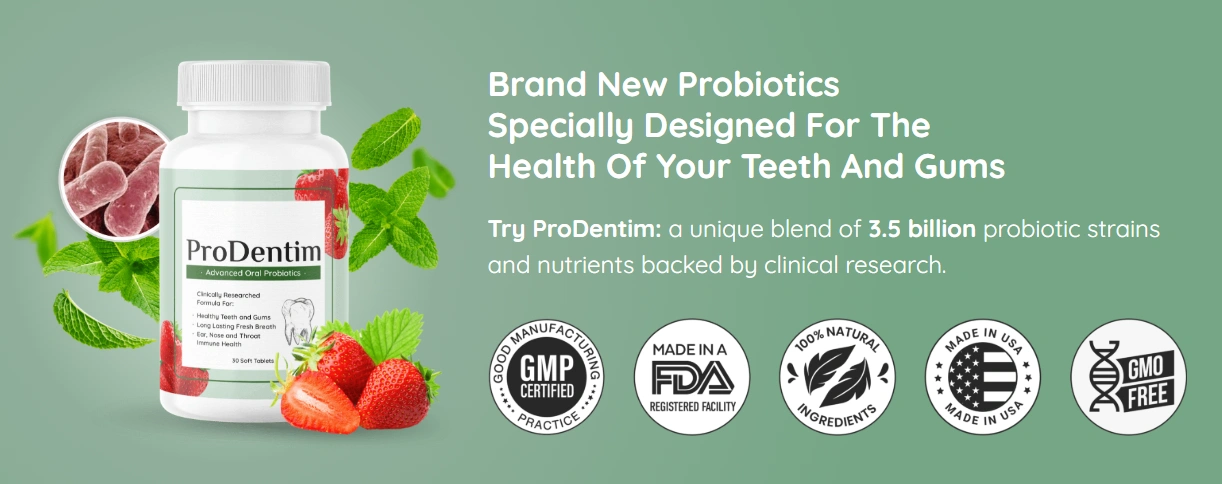
Prodentim is marketed as an oral probiotic supplement, making it relevant to people specifically interested in probiotics for the mouth rather than conventional gut-focused probiotic products.
When evaluating Prodentim—or any oral probiotic—it’s worth looking at the actual formulation, ingredients, directions, and available evidence rather than assuming that all probiotics work in the same way.
The key questions to ask are:
- Which probiotic strains does it contain?
- Why were those ingredients selected?
- How is the product intended to be used?
- What evidence is available for its ingredients?
- Does the product make claims that go beyond the available research?
Taking this approach can help consumers make a more informed decision.
Oral Probiotics Are Not a Replacement for Dental Care
It’s also important to keep expectations realistic.
An oral probiotic supplement should not be presented as a replacement for brushing, flossing or other recommended dental care.
If you have persistent gum bleeding, pain, swelling, tooth sensitivity, or other concerning symptoms, speaking with a dentist is more appropriate than relying on a supplement alone.
Probiotics are an area of ongoing research, and individual responses can differ.
Frequently Asked Questions
Are oral probiotics different from regular probiotics?
Yes, they can be. Oral probiotics are specifically formulated and marketed for the oral environment, while many conventional probiotics are primarily designed around digestive health. The strains and delivery formats can also differ.
Can regular probiotics help oral health?
Some probiotic strains used in conventional products have been studied for oral-health applications, but you shouldn’t assume that every regular probiotic will have the same effects in the mouth.
Are oral probiotics good for gums?
Research suggests that certain probiotic strains may influence some measures associated with gum health, but results vary. Evidence should be evaluated according to the specific strain, formulation, and outcome being studied.
Can oral probiotics replace brushing and flossing?
No. Oral probiotics should not be considered a substitute for established oral-hygiene practices or professional dental care.
Can you take oral and regular probiotics together?
Whether combining supplements is appropriate depends on the specific products and your individual circumstances. If you’re unsure, consider discussing the products with a healthcare professional or dentist.
How long do oral probiotics take to work?
There isn’t one universally established timeframe. Research studies use different strains, doses, and treatment periods, so results from one product or study shouldn’t automatically be applied to another.
Conclusion :
So, what’s the difference between oral probiotics and regular probiotics?
The main distinction is their intended environment and formulation. Conventional probiotics are commonly designed around the digestive system, while oral probiotics are developed with the oral environment and oral microbiome in mind.
That doesn’t mean one category is universally better than the other.
The most useful approach is to look beyond the word “probiotic” and examine the specific strains, delivery format, ingredients, research, and intended use.
If you’re considering an oral probiotic such as Prodentim, evaluate the product information carefully and keep your expectations realistic. Oral probiotics may be an interesting area of oral-health research, but they work best as a potential addition to—not a replacement for—good everyday dental care.
As research continues, consumers will have more information to evaluate which probiotic strains and formulations may be most useful for different oral-health goals.