FemiCore Review What’s Inside the Formula and Does It Work?
-
Click here – to Get 30% Off on the Best Bladder Control Supplement
-
Click here – to Learn More About FemiCore
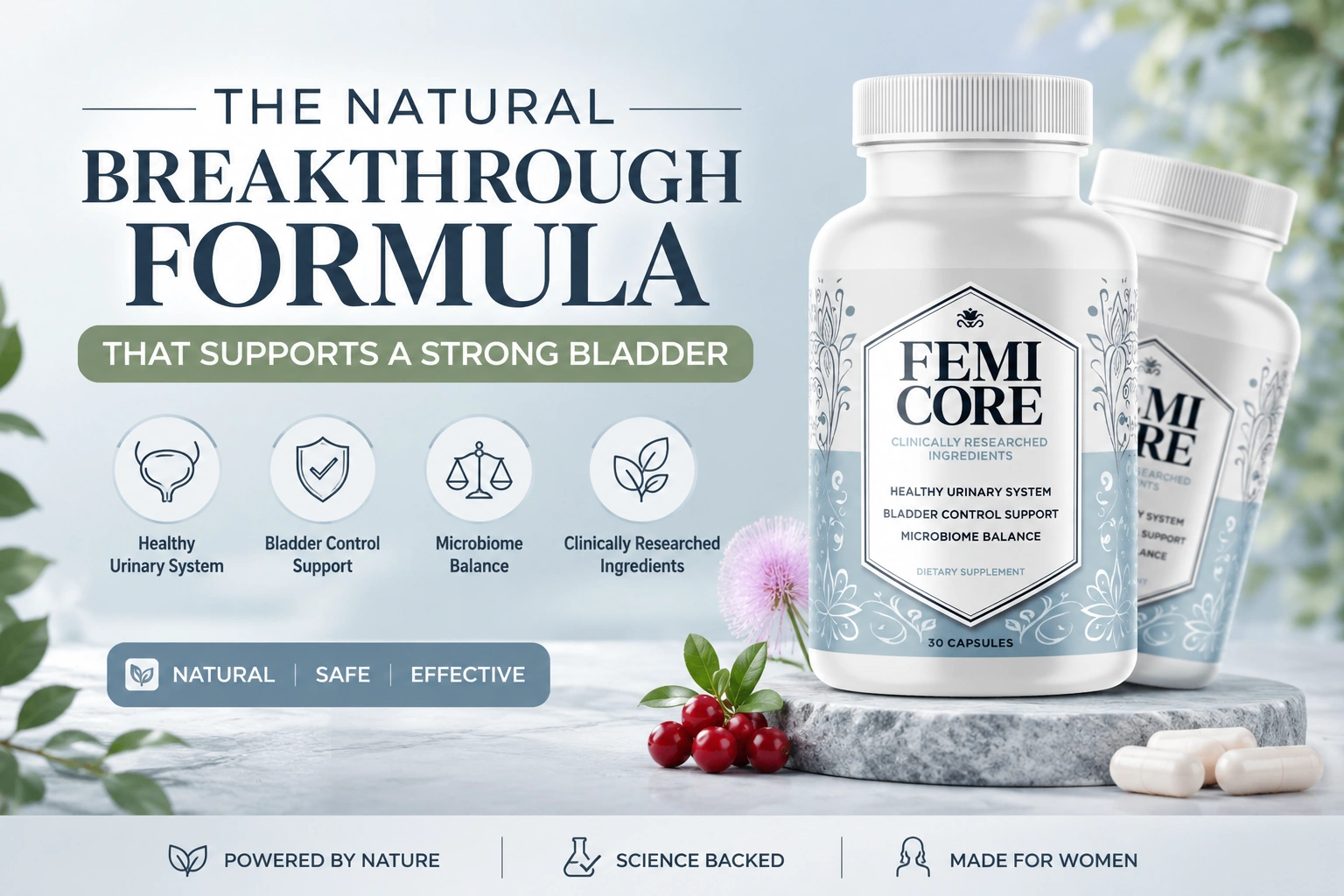
If you’re researching FemiCore reviews, you’ve probably seen claims about supporting women’s urinary and bladder wellness. But before buying any supplement, it’s worth looking beyond the sales page and asking a few basic questions:
What’s actually inside FemiCore? How does the formula compare with the claims being made? Is there good evidence for the ingredients? And is FemiCore worth considering?
This FemiCore review takes a closer look at the product, its ingredients, potential benefits, limitations, safety considerations, and the evidence behind the claims.
Rather than simply repeating marketing statements, this review aims to explain what we know—and what remains uncertain—so you can make a more informed decision.
Important: This article provides general educational information. FemiCore is a dietary supplement, not a medication. Supplements cannot replace professional diagnosis or treatment.
What Is FemiCore?
FemiCore is a women’s wellness supplement that focuses on urinary and bladder support. The product formula contains probiotic strains and other ingredients that the manufacturer says may support urinary and vaginal microbiome health.
Bladder and urinary concerns affect many women. According to the National Institute of Diabetes and Digestive and Kidney Diseases (NIDDK), several factors can contribute to urinary incontinence, including pregnancy, childbirth, menopause, aging, constipation, certain health conditions, and other factors.
If you’re looking for practical lifestyle guidance, our guide to bladder health for women covers seven everyday habits that may affect bladder wellness.
That distinction matters.
A supplement marketed for urinary wellness isn’t automatically a treatment for urinary incontinence, urinary tract infections, or another medical condition.
So, when evaluating FemiCore, it’s useful to look separately at:
- What the manufacturer says
- What ingredients are included
- What research exists on individual ingredients
- What evidence exists for the finished product
- Whether the product is appropriate for a particular person
FemiCore Ingredients: What’s Inside the Formula?
The current FemiCore product information I found describes a nine-component formula that includes multiple Lactobacillus probiotic strains.
The exact label should always be checked before purchasing because formulations and serving information can change.
Lactobacillus Probiotic Strains
Probiotics are live microorganisms that are studied for their potential effects on the body’s microbial communities.
The FemiCore product information highlights several Lactobacillus strains, including:
- Lactobacillus crispatus
- Lactobacillus acidophilus
- Lactobacillus plantarum
- Lactobacillus gasseri
- Lactobacillus casei
The manufacturer connects these strains with urinary and vaginal microbiome health.
However, there’s an important distinction between research on a specific probiotic strain and proof that a particular commercial supplement produces a specific health outcome.
The amount, strain identity, manufacturing process, and formulation can all matter when evaluating probiotic research.
Cranberry Extract
Cranberry is another familiar ingredient associated with women’s urinary wellness.
Research on cranberry products has explored their relationship with urinary-tract health, but findings can vary depending on the population, product, preparation, and outcome researchers study.
Therefore, the presence of cranberry in FemiCore doesn’t by itself prove that the finished product will prevent or treat a particular urinary condition.
Bearberry
Bearberry, also known as Arctostaphylos uva-ursi, is a botanical ingredient traditionally associated with urinary wellness.
However, “traditionally used for” and “clinically proven to treat a condition” are not interchangeable statements.
Anyone considering a supplement containing botanical ingredients should check safety information and potential interactions, particularly if they take prescription medicines.
Berberine
Berberine is a plant-derived compound that has been studied for several biological effects.
Research on berberine covers several areas of health, but research on an individual ingredient does not necessarily prove that FemiCore itself will deliver the same results.
This is one of the most important principles to remember when reading supplement reviews: research on individual ingredients does not automatically prove the effectiveness of the finished product.
Mimosa Pudica
The FemiCore product formula also includes Mimosa pudica, a botanical ingredient that the manufacturer lists as part of its formula.
The product’s marketing materials describe a role for this ingredient within its broader formula. As with other botanicals, consumers should distinguish the manufacturer’s description from independently established clinical evidence.
Does FemiCore Work?
This is probably the biggest question behind searches for “Does FemiCore work?”
The honest answer is that the evidence needs to be considered carefully.
A supplement can contain ingredients that have been studied individually without the finished product itself having strong clinical evidence demonstrating a specific outcome.
The FemiCore website presents the formula as being designed to support urinary and vaginal microbiome health.
But that doesn’t mean every person taking FemiCore will experience the same results.
Factors such as age, health status, medications, diet, lifestyle, the underlying cause of urinary symptoms, and individual response can all matter.
For that reason, I would be cautious about reviews that promise that FemiCore will eliminate leakage, cure urinary problems, or guarantee a particular result.
Those are much stronger claims than the available information can justify.
FemiCore Benefits: What Does It Aim to Support?
FemiCore focuses on women’s urinary and microbiome wellness. According to the product information, the formula aims to provide nutritional support in several areas.
Potential areas of interest include:
- Urinary wellness
- Women’s wellness
- Microbiome support
- Probiotic supplementation
- General bladder-health support
However, these points describe the product’s intended benefits rather than proven medical outcomes. The available research on individual ingredients does not necessarily confirm that FemiCore will deliver the same results.
NIDDK explains that bladder-control problems can have different causes, and treatment depends on the underlying type and cause.
That means someone experiencing persistent urinary symptoms shouldn’t assume that a supplement is the appropriate solution without first understanding what’s causing those symptoms.
FemiCore Side Effects and Safety
Another important part of any FemiCore review is safety.
Even products made with commonly used vitamins, probiotics, or botanicals aren’t automatically appropriate for everyone.
Potential concerns can depend on the individual ingredients, dose, allergies, existing health conditions, and medications a person takes.
Before using a supplement, consider discussing it with a qualified healthcare professional if you:
- Take prescription medication
- Have an existing medical condition
- Are pregnant or breastfeeding
- Have a history of allergies or sensitivities
- Are preparing for surgery
- Have persistent or unexplained urinary symptoms
It’s also important to follow the product’s current label rather than relying on information copied from another website.
FemiCore Reviews and Customer Feedback
Online customer reviews can be useful, but they should be treated carefully.
A testimonial can tell you about one person’s experience, but it cannot establish that the same result will happen for everyone.
When reading FemiCore reviews, look for:
- Verified or identifiable review sources
- Specific descriptions rather than vague praise
- Both positive and negative experiences
- Clear information about how long the product was used
- Disclosure of whether the reviewer received compensation
- Whether the review discusses the actual product being sold
Be especially cautious with reviews that promise dramatic results or claim that a supplement works for everyone.
Likewise, a negative review doesn’t automatically prove that a product is ineffective.
Individual experiences can vary considerably.
FemiCore Complaints: What Should Buyers Check?
Before purchasing any supplement online, it’s sensible to check more than just customer testimonials.
Look at:
1. Product labeling
Check the current Supplement Facts panel and serving instructions.
2. Return policy
Understand the current refund terms before ordering.
3. Recurring billing
If the website offers subscriptions or recurring orders, make sure you understand how they work before completing checkout.
4. Shipping information
Review shipping costs, delivery estimates, and the company’s contact information.
5. Ingredient transparency
Make sure the current product label clearly identifies its ingredients and amounts where applicable.
These details can be more useful than a simple star rating.
Is FemiCore a Treatment for Bladder Problems?
No supplement review should imply that FemiCore replaces medical care.
Urinary incontinence and bladder-control problems can result from multiple causes. NIDDK lists factors including pregnancy, childbirth, menopause, constipation, certain medical conditions, infections, and other health issues.
Some causes require professional diagnosis and treatment.
For example, a person experiencing urinary leakage may need an evaluation to determine whether the issue involves pelvic-floor weakness, an infection, medication effects, bladder problems, or another underlying condition.
That is why a supplement should be viewed separately from medical treatment.
What Else Can Support Bladder Health?
Supplements aren’t the only consideration.
NIDDK recommends healthy lifestyle habits that can support bladder health, including maintaining a healthy weight, eating a balanced diet, drinking an appropriate amount of fluid, and staying physically active.
Some people also find that certain foods and drinks affect their bladder symptoms. NIDDK notes that caffeine, carbonated drinks, alcohol, spicy foods, citrus products, and other foods may contribute to bladder irritation for some individuals.
Individual responses vary, so eliminating large numbers of foods isn’t necessarily appropriate for everyone.
Who Might Consider FemiCore?
FemiCore may be of interest to adults looking for a dietary supplement positioned around women’s urinary and microbiome wellness.
However, whether it makes sense for you depends on your individual circumstances.
A person with unexplained urinary symptoms should prioritize finding out what’s causing those symptoms rather than relying exclusively on a supplement.
If your main goal is general wellness and you’re considering adding a supplement to an otherwise healthy routine, reviewing the ingredients, label, safety information, and available evidence is a sensible starting point.
FemiCore Review: Conclusion
So, is FemiCore worth considering?
It depends on what you’re expecting from it.
FemiCore is marketed as a women’s urinary and microbiome wellness supplement. The current product information highlights a multi-ingredient formula that combines several Lactobacillus strains with botanical ingredients.
The ingredient profile gives consumers a reason to examine the product more closely, especially the research available on its individual ingredients.
However, research on individual ingredients does not necessarily prove that the complete FemiCore formula will deliver the same clinical results. Consumers should consider the available evidence for the finished product separately from research on its individual ingredients.
In other words, it’s reasonable to research FemiCore, but unrealistic to expect a supplement review to guarantee an outcome.
If you’re considering purchasing it, check the current label, ingredients, serving information, price, refund policy, and ordering terms. Most importantly, don’t use a supplement as a substitute for medical evaluation if you’re experiencing persistent urinary or bladder symptoms.
Before considering any urinary wellness supplement, it’s useful to understand the everyday habits that can influence bladder health. Our guide to healthy bladder habits for women explains hydration, caffeine, bathroom habits, pelvic-floor health, and other lifestyle considerations.
Our Rating Approach
Rather than giving FemiCore an arbitrary five-star rating, we’d suggest evaluating it across several factors:
| Factor | What to Consider |
|---|---|
| Formula | Are the ingredients clearly disclosed? |
| Evidence | What independent research exists? |
| Transparency | Is product information easy to verify? |
| Safety | Is it appropriate for your situation? |
| Value | Does the current price make sense to you? |
| Expectations | Are the claims realistic? |
This approach gives you a more useful picture than a simple “buy” or “don’t buy” recommendation.
Frequently Asked Questions
What is FemiCore?
FemiCore is marketed as a dietary supplement for women’s urinary and microbiome wellness. Its current product information describes a multi-ingredient formula containing several probiotic strains and botanical ingredients.
Does FemiCore work?
The answer may vary by individual. Research on individual ingredients does not automatically prove that the finished FemiCore formula produces a specific medical outcome.
What are the main FemiCore ingredients?
The current product information I found lists several Lactobacillus probiotic strains along with ingredients including cranberry, bearberry, berberine, and Mimosa pudica. Always verify the current Supplement Facts label before purchasing.
Can FemiCore treat urinary incontinence?
It should not be presented as a treatment for urinary incontinence. Urinary incontinence can have multiple causes, and NIDDK recommends discussing bladder-control problems with a healthcare professional.
Should I talk to a doctor before taking FemiCore?
If you have persistent urinary symptoms, take medication, have a medical condition, are pregnant or breastfeeding, or have other safety concerns, discussing the product with a qualified healthcare professional is a sensible step.