
Does The Brain Song Really Work for Memory? Have you ever walked into a room and forgotten why you were there, struggled to concentrate on a task, or found yourself searching for a familiar name or word? Occasional forgetfulness is something many people experience, which has increased interest in audio-based approaches designed to support focus, relaxation, and cognitive performance.
- Click here – to Get 30% Off on the Best Brain Stress Relief
- Click here – to Learn More About The Brain Song
One product that has attracted attention is The Brain Song, an audio-based program that uses specially designed sound patterns. But an important question remains: Does The Brain Song really work for memory? In this review, we’ll look at what the program is, how it is intended to work, what science says about related audio and brainwave concepts, how people may use it, and what you should consider before purchasing. The goal is to separate the general science behind the technology from claims specifically associated with the commercial product. 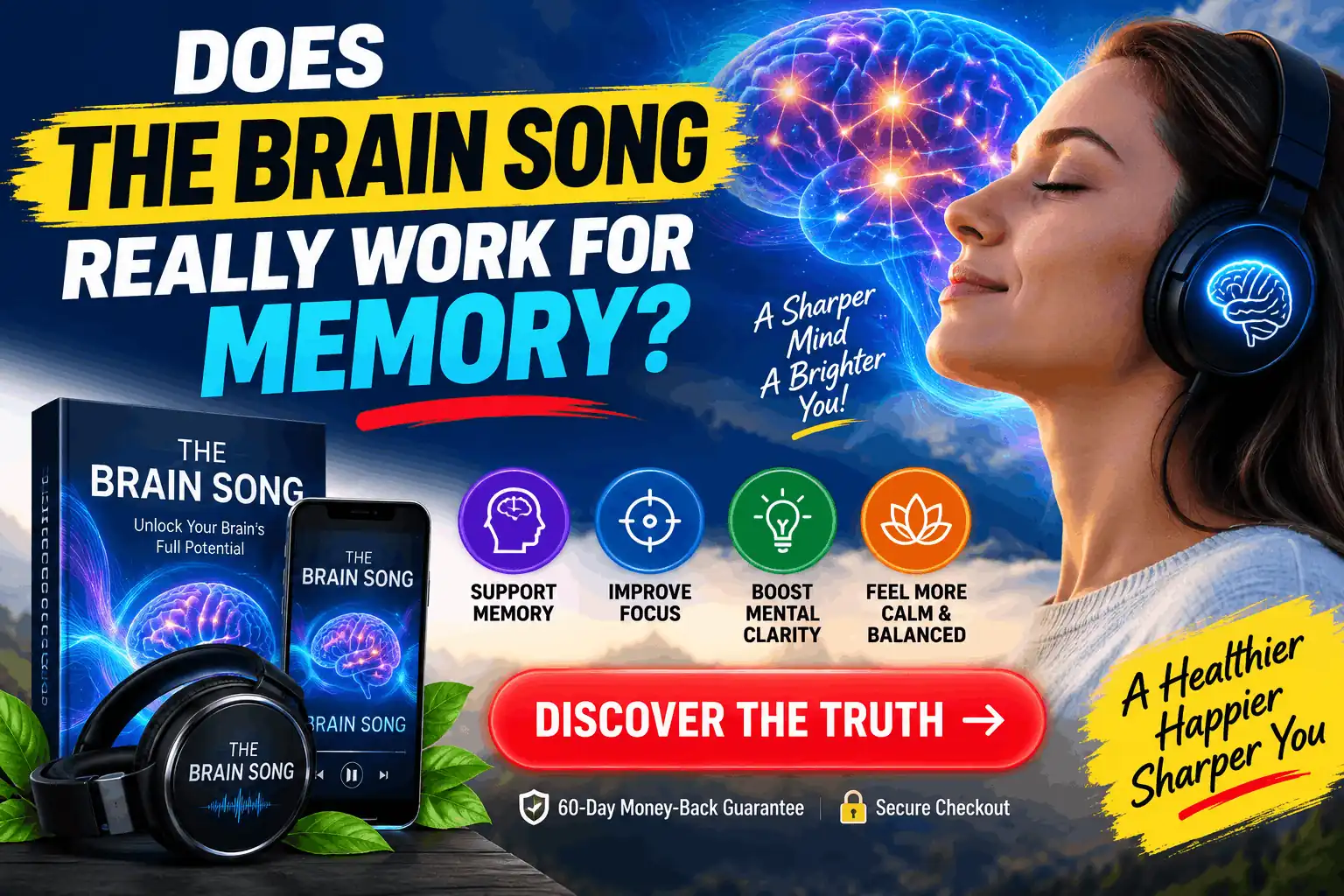
What Is The Brain Song?
The Brain Song is an audio-based program designed around concepts involving sound, brain activity, and auditory stimulation. Rather than being a conventional supplement, pill, or medication, the program uses audio as its primary method. The idea is that particular sound patterns may influence brain activity or help create conditions associated with concentration and mental performance. This approach is related to a broader area of research involving auditory stimulation and brainwave entrainment. However, it is important to understand the difference between research into a scientific concept and research directly testing a particular commercial product. Research into brainwave activity and auditory stimulation can provide interesting background information, but that doesn’t automatically establish that every commercial audio program will produce the same effects.
How Does The Brain Song Work?
The basic concept behind The Brain Song involves carefully designed audio intended to interact with the way the brain processes sound. One concept commonly discussed in this area is brainwave entrainment. In simple terms, entrainment refers to the idea that rhythmic sensory stimulation may influence patterns of brain activity. Different frequencies of brain activity have been associated with different mental states. Gamma activity, for example, has been studied in connection with cognitive processes including attention, perception, and memory. This scientific background is one reason audio-based cognitive programs have generated interest. However, the relationship between sound stimulation and real-world memory performance is complex. A change in brain activity does not automatically mean that someone will experience a noticeable improvement in memory. That’s why it’s useful to approach claims about audio-based brain programs with reasonable expectations.
Can The Brain Song Really Help With Memory?
This is probably the most important question for anyone considering the program. The answer requires some nuance. There is scientific interest in the relationship between brain activity and memory, including research involving gamma-frequency activity. Researchers have investigated whether stimulating particular brain rhythms could influence cognitive processes. But that doesn’t mean there is conclusive evidence that a particular commercial audio program will improve memory for everyone who uses it. If you’re considering The Brain Song for memory, think of it as an audio-based wellness or cognitive-support product rather than a proven treatment for memory problems. Individual experiences can also vary considerably. Someone might find that listening to relaxing or structured audio helps them concentrate, while another person may notice little difference. Factors such as sleep, stress, environment, existing health conditions, and individual sensitivity to sound can all influence concentration and perceived mental performance.
The Science Behind The Brain Song
To understand why programs like this attract attention, it helps to look at the broader scientific concepts involved.
Brainwave Activity
The brain continuously produces electrical activity that can be measured using techniques such as electroencephalography, commonly known as EEG. Researchers categorize some of these patterns by frequency. Gamma activity is generally associated with relatively fast oscillations and has been studied in relation to cognitive functions. Memory is not controlled by one single brainwave or one isolated area of the brain, though. It involves complex interactions among different brain regions and networks. Therefore, it would be an oversimplification to say that stimulating one particular frequency automatically creates better memory.
Auditory Stimulation
Sound can influence attention and mental state. Music, rhythmic sounds, and other auditory stimuli can affect how people feel and where they direct their attention. This is one reason audio-based approaches are interesting to researchers. At the same time, evidence from general auditory research should not automatically be interpreted as proof that a specific commercial recording produces a particular cognitive outcome.
Brainwave Entrainment
Brainwave entrainment is another concept frequently discussed in this space. The general theory is that repetitive sensory stimulation may encourage neural activity to synchronize with particular rhythms. Researchers continue to investigate these mechanisms, but the evidence is not simple or universal. If you’re researching The Brain Song review information online, pay attention to whether a website is discussing general scientific research or evidence specifically involving the product. That distinction can help you make a more informed purchasing decision.
What Does The Brain Song Include?
The program is centered around audio rather than a traditional physical supplement. This can make an audio program relatively convenient for people who prefer digital products. Depending on how you choose to use it, listening may fit into a quiet morning routine, study session, work period, or relaxing evening. One potential advantage of an audio approach is that there is no need to swallow a pill or add another supplement to your daily routine. However, convenience doesn’t necessarily mean effectiveness. Before purchasing, it’s sensible to review the current product page for the exact contents, access instructions, pricing, and purchase terms because digital products can change over time.
How To Use The Brain Song
If you decide to try an audio program, consistency and a suitable listening environment can be more useful than simply playing it occasionally in a noisy environment. Consider using headphones or speakers in a comfortable, relatively quiet setting, following the manufacturer’s recommended instructions. You might incorporate listening into an existing routine rather than treating it as a replacement for healthy habits. For example, some people may prefer listening while preparing for focused work or during a quiet period when distractions are limited. Avoid listening at excessively high volume. Comfortable listening levels are generally preferable, especially during longer sessions. And remember that an audio program should not replace professional medical evaluation if you’re experiencing persistent or worsening memory problems.
The Brain Song Pros and Cons
Before deciding whether to purchase, consider both potential advantages and limitations.
Potential Advantages
Audio-based format: The program doesn’t require taking a conventional supplement. Convenient: Digital audio can potentially be used at home or during other quiet activities. Interesting approach: People interested in brainwave entrainment and auditory stimulation may find the concept worth exploring. Simple routine: An audio-based product can be incorporated into an existing daily routine.
Potential Limitations
Results may vary: There is no reason to expect identical experiences from every user. Product-specific evidence matters: Research into related scientific concepts isn’t necessarily evidence that the commercial product itself produces the same effects. Not a medical treatment: An audio program shouldn’t be considered a substitute for diagnosis or treatment of a medical condition. Expectations matter: Marketing language can sometimes make scientific concepts sound more definitive than the available evidence supports.
Is The Brain Song Legit?
Another common search question is whether The Brain Song is legit. The answer depends on what you mean by “legit.” It is a real commercial audio-based product, but that is different from saying that every benefit claimed or expected by customers has been scientifically established. When evaluating any cognitive-support product, look beyond testimonials and marketing statements. Check:
- What exactly does the product contain?
- How does the company explain its method?
- Is the scientific research directly related to the product?
- What are the purchase terms?
- Is there a refund or guarantee policy?
- Are expectations presented realistically?
These questions can help you evaluate the product more objectively.
The Brain Song Reviews: What Should You Look For?
If you’re searching for The Brain Song reviews, remember that customer experiences are personal observations rather than controlled scientific studies. A positive review may tell you that someone enjoyed the audio or felt more focused while using it. A negative review may indicate that another person didn’t notice a meaningful difference. Neither type of review can establish how the product will work for you personally. When reading reviews, look for specific information rather than vague statements. For example, a useful review might explain how frequently the person listened, what they expected from the program, and what changes they personally noticed. Be more cautious with reviews that make dramatic promises or claim guaranteed results.
Is The Brain Song Worth Trying?
Whether it’s worth trying depends on what you’re looking for. If you’re interested in audio-based approaches to concentration and cognitive wellness and understand that results aren’t guaranteed, you may find the concept interesting. If you’re expecting a guaranteed or dramatic improvement in memory, it’s better to reconsider those expectations. Memory and concentration are influenced by many factors, including sleep, stress, physical activity, nutrition, learning habits, and overall health. An audio program can be considered one possible part of a broader routine, rather than a magic solution.
The Brain Song Price and Purchase Considerations
Before purchasing, check the official sales page for the latest price, available packages, access details, and refund policy. Prices and offers can change, so an older review may not accurately reflect the current offer. Also check whether you’re purchasing a one-time digital product, subscription, bundle, or another type of offer. Understanding the purchase terms before entering payment information is an important part of making any online buying decision.
Who Might Consider Trying It?
An audio-based cognitive wellness program may be interesting to adults who enjoy experimenting with structured listening routines and are curious about the relationship between sound and mental performance. It may also appeal to people who prefer digital products over physical supplements. However, people experiencing significant, persistent, or rapidly changing memory difficulties should not rely on an online product review to determine the cause. Memory changes can have many possible causes, and a healthcare professional can help determine whether further evaluation is appropriate.
Conclusion: Does The Brain Song Really Work for Memory?
So, does The Brain Song really work for memory? The most responsible answer is that the underlying concepts are interesting, but you should distinguish research into auditory stimulation and brain activity from evidence directly demonstrating that this specific commercial program improves memory. There is scientific interest in brain rhythms, auditory stimulation, and their potential relationship with cognitive processes. However, that doesn’t mean everyone who listens to a particular audio program will experience measurable memory improvement. For that reason, it’s best to approach The Brain Song with realistic expectations. If you’re interested in trying an audio-based approach, review the product information carefully, understand the purchase terms, and consider it as one component of a broader healthy lifestyle rather than a guaranteed solution. Most importantly, don’t ignore persistent memory concerns simply because you’re trying a wellness product. If memory problems are affecting everyday life, speaking with a qualified healthcare professional is the more appropriate next step. Ultimately, the decision comes down to your personal goals, expectations, and comfort with the available evidence.